|
GLEBUS REAL ESTATE |
|
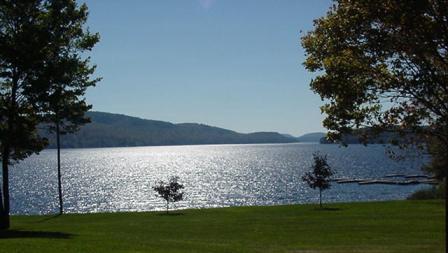
Welcome to the Town of Schroon The Majestic SCHROON LAKE of the Adirondacks!
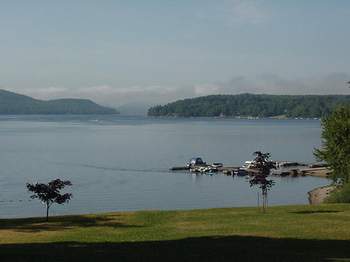
Historical Overview of the Town of Schroon Schroon is the name of a mountain, a river and a lake. The Town of Schroon was formed from Crown Point, March 20th, 1804. It is bounded on the north by the Town of North Hudson, east by Crown Point and Ticonderoga; south by Warren County and the Town of Minerva and west by Minerva. This small popular tourist town contains portions of the Kyaderosseras in the southeast and the Schroon Range in the northwest. Located in the beautiful valley of these two ranges is the Schroon River which on occasion during the springtime overflows its bank leaving a rich alluvial fertile soil. The river flows into Schroon Lake which lies in both Essex and Warren counties. This picturesque lake is a probable reason for the origin of the township’s present name SCHROON.
To most natives and many summer residents this attractive tourist town, population approximately 1700 permanent and 4,000 summer residents, it is of interest to know how the Town’s name originated. There is without question a problem of derivation with its name. It has been noted by many writers of this subject that its name is of Indian or French ancestry origin. Most writers are more apt to conclude that the name Schroon is derived from French ancestry, Scarron or Schroon rather than of Indian origin, however there is no documentary evidence to prove this conclusion.
During the 17th and 18th centuries bands of Indian tribes wandered in search of game throughout the region of the present day township long before an Europeans settlers explored the area. The Algonquians first and later the Iroquois hunted in this region and one of their most prized hunts was for beaver (soft gold). Not only did they hunt for personal survival in the wilderness but for the profits as well. Furs were traded for guns, fire water, trinkets, beads, necklaces and other related items of interest to them. Travel through the wilderness was slow, cumbersome and difficult. However, the waterways made travel the easiest and fastest.
Early Exploration of North America The French claimed the area by way of the explorations of Cartier, Verranzano and Champlain. The British claimed the area based on the voyages of the Cabots. Rivalry for territory and colonial expansion was to flare into a full scale warfare in North America and Europe.
Europeans Arrive The Europeans namely the French and the English competed to build an Empire in this region from 1609-1759. The French through the efforts of the exploration of Jacques Carrier who in 1536 entered the St Lawrence River and was the first to see the Adirondack Mountains and Samuel de Champlain who Lake Champlain took its name after claimed most of the region along the St. Lawrence River Valley and the Adirondacks. The Empire that both France and England wanted to establish in North America would be built on the valuable fur trade. Both countries came into conflict over the control of the fur trade in the Ohio Valley region and the Adirondacks. The Indian tribes referred to this region as "Couchsachrage" or Beaver Hunting Country.
In the early decades of the 18th Century the English, Dutch and the French used the 4 mile peninsula of Crown Point as a fur trading post while the Indians used the area for hunting, fishing and trading. The French were shipping nearly 150,000 furs per year to France. Furs were in great demand especially for families of Royalty in Europe. The fur coat and the hat were a status symbol of wealth as well as for keeping one warm in a cold castle such as Palace of Versailles, the residence of the Sun King of France, Louis XIV. The beaver population was almost extinct by 1835. In order for mother country France to continue to control this lucrative trade with the Abenki and other Indian tribal groups in the area she realized the importance of controlling the waterways. The Champlain valley became a major trade route between Albany and New York to the south and Montreal and Quebec to the north. In the Great Wilderness Adirondack waterways were the fastest and easiest way to travel in the 1700's. The country that controlled the waterways, especially Lake Champlain or Lake George, would control the fur trade. The country either France or England who gained controlled of the fur trade would in fact be the wealthiest nation. The wealthiest country would be the most powerful on the North American continent and an Empire would result. The real quest for either was to keep the Empire strong when attacks from the other would attempt to bring about its downfall. One must remember this area was total wilderness. Travel was most difficult for anyone trying to move through the mountains . Louis XV , King of France gave the orders to build a Fort on the east side of Lake Champlain at the narrowest part of Lake Champlain . He was worried the English were gaining ground in the Lake Champlain Valley. .
The French were the first to build a Fort in the Champlain Valley at Pointe a la Chevelure, known today as Chimney Point . This fort was built in 1730 and completed on September 22nd. It was known as Fort DiPeux. It was a wooden stockade fort 100' x 100' occupied by 20 soldiers. There were triangular bastions at each corner. It included 3 buildings, barracks for the soldiers, room for the commandant, a chaplain, a kitchen , a bakery, and a storehouse.
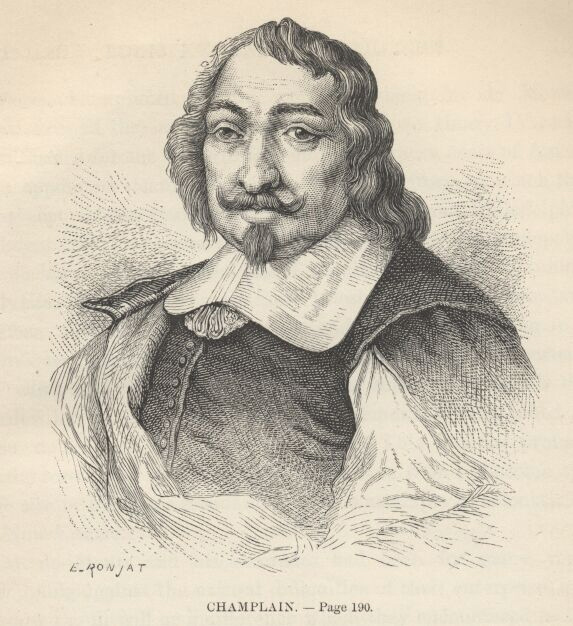
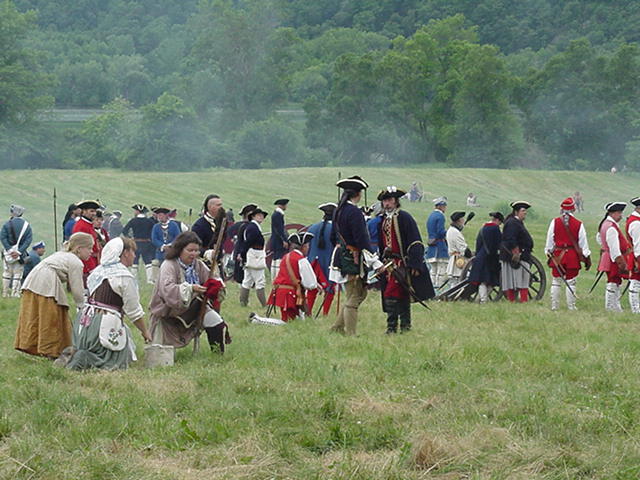
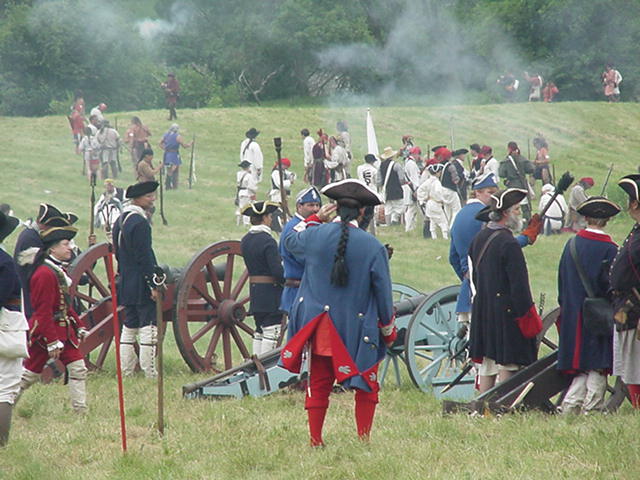
One year later in 1731 France decided to build in a better location on the west side of Lake Champlain directly across from the previous built fort the year before. This fort would be named Fort St. Frederick and its name was derived after the Secretary of State, Frederick Maurepas who was the initial spokesman for the French court of admiralty at the time the fort was built. The English called the fort Crown Point. This fort would serve as an outpost for raiding parties made up of the French & their Indian allies the Algonquin and Huron against their enemy the Iroquois and the British who were attempting to control this area that France claimed as a result of the exploration of Samuel de Champlain in July of 1609. He entered the Lake from the Richelieu River with a band of 90 Indian allies consisting of the Algonquin, Huron and Montagnais. One evening near Crown Point where a peninsula jutted out from the West side of Lake according to Samuel de Champlain he and his comrades ran into a band of Iroquois. Being that it was dark both parties went ashore and chanted through the night and prepared for a battle the next day. As they met at a standoff, movement occurred from the opposing party and Samuel Champlain raised his areqbus and fired killing two Iroquois chiefs. His other partner from the woods fired shortly thereafter wounding a third who later died. This battle set the pattern of Indian alliances for the next 175 years in the Lake Champlain Valley with the Algonquin allying themselves with the French and the Iroquois with the English. Samuel De Champlain
France and England Compete to Build An Empire in North America
The English were successful in 1759 in driving the French from the continent by winning the last battle of the conflict on the Plains of Abraham in Quebec, Canada. Both the English general Wolfe and the French general Marquis de Montcalm died as a result of this battle. The Mohawks of the Iroquois Confederation had allied themselves with the English and the Algonquians and the Huron's with the French. Without doubt both these tribes at one time or another had visited Schroon Lake amongst the tall pines. No real permanent settlements were made by them. If so, a fixed name may have been given to the area. The only evidence of permanent Indian settlements were in North Elba near John Brown’s estate in present day Lake Placid and between the upper Saranac and the Fulton chain of lakes. 1609 to 1759 French Occupied The Lake Champlain Valley
1759 The French Lost to the British on Plains Of Abraham in Quebec, Canada It has been mentioned by various Indian guides such as Sabele that the Iroquois gave the name Ska-ne-tah-no-wah-na to Schroon Lake. On the other hand, the Algonquians gave the name Skoo-na-pus. The first syllable of Skoo-na-pus is reflective of Schroon. One must make his own judgment as to this derivation or the " Madame Scarron" one.
Town of Scarron Derives its Name From French Officers
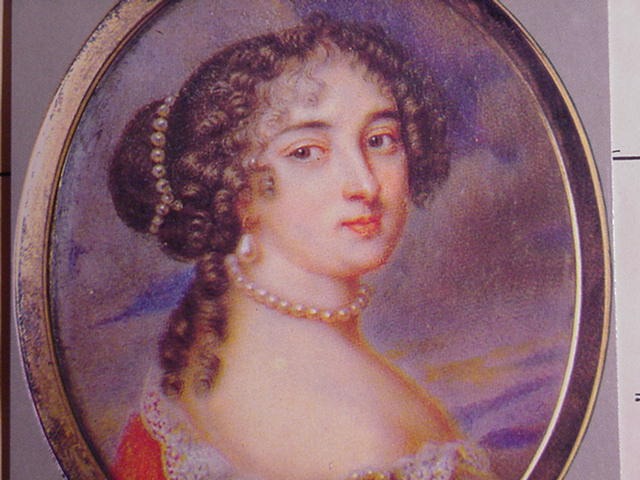
During the 1700’s French soldiers and officers were encamped at Fort St. Frederick. Begun as a military post in 1730 and completed in 1736, the fort served to protect French fur trade interests against the English. While exploring the Great Wilderness region or North Woods these very same soldiers discovered the lake. It provided them with hearty meals of trout and salmon. It is said that the officers of this military installation gave the name SCARRON to the picturesque lake in memory of the widow of the French dramatist and poet, Paul Scarron. This poor crippled poet was enlightened by the grace of his young and beautiful wife who after his death secretly married into Royalty thus becoming the wife of Louis XIV. This young lady captured the hearts of many who were entertained at the home of her late husband, Paul Scarron. Schroon Lake may very well take its name from Madame Sacroon. Most writers on this subject would most likely agree. Who really was this gracious and beautiful lady who eventually was to be asked into marriage by Louis XIV? Madame Scarron’s maiden name was Françoise d’ Aubigne. Her grandfather Agrippa d’ Aubigne was a very close associate of Henry IV. Her father Constant d’ Aubigne was imprisoned for killing his wife and her lover. While in prison he married Jeanne de Cardilhac who was the daughter of the governor of the prison. Before completing his term of sentence his wife, Jeanne, had several children, one of them being named Françoise. After Constant was released from prison, he traveled to the Virgin Islands where he later died in sheer poverty. Françoise along with her mother returned to France and took up residency with the Countess de Neuillant, the godmother of Françoise. There she lived as a peasant caring for the poultry and other farm animals. Little did she know that the poet, Paul Sacrron, living on the same street would someday ask for her hand in marriage. Having wealth at the time, he offered to give Françoise enough money for her to be able to finish her education at a convent. Along with being indebted to him, her beauty and charm soon captured Paul’s heart.
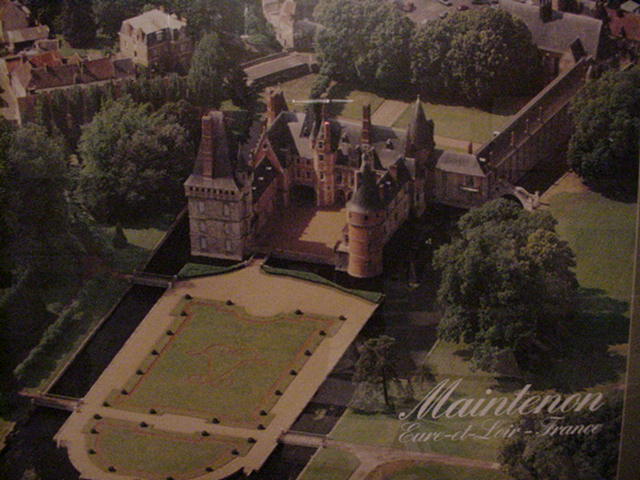
Madame de Maintenon
Madame Scarron At the young age of 17 she married Paul. He was 34 years of age. Many intellectuals and French philosophers were entertained at their home. Francosie always captivated her audience, even Royalty. Unknown to many Françoise became the secret governess of the children of Louis XIV by Madame de Montespan. It became competitive for her and Madame de Montespan to win the heart of King. Louis XIV . The King had every intention of making Queen Maria Theresa of Austria his mistress, however her death influenced Louis to make the decision of marrying the widow, Françoise. Madame de Montespan had brought embarrassment to the King earlier and thus he had no desire to ask her hand in marriage. The wedding between Françoise and Louis XIV took place at mid-night on June 1684 at the Palace of Versailles and thus Françoise became the Queen of France. The uncrown queen became known as the Marquise de Maintenon, a title bestowed on her by Louis XIV who placed her in charge of his estate Maintenon. For many years thereafter she continued to have an influence over the history of France.
Estate of Maintenon was bestowed on Madame Scarron By Louis XIV
Whether the township’s name was a derivation of Indian origin or French ancestry is a matter of opinion, however most writers on the subject would probably lean toward the Madame Scarron theory. Both are mere legend. The name Schroon today without question has been a subject of distortion over the years by its very own settlers. The town’s name Scarron remained on its records until 1837. Town of Schroon or the Town of Scarron.
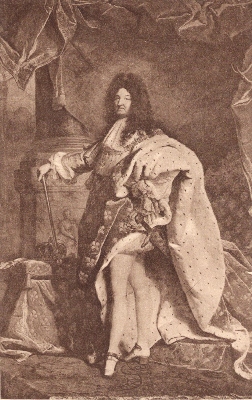
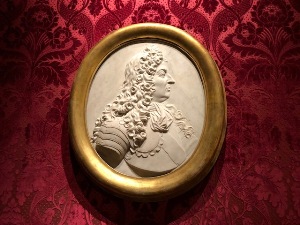
Louis XIV-King of France
Secretly Marries Madame Scarron at the Palace of Versailles in 1684
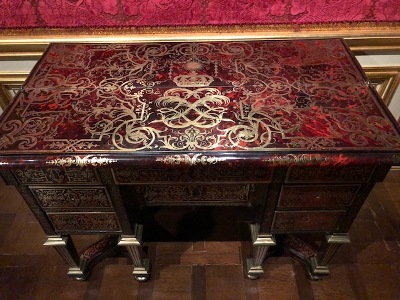
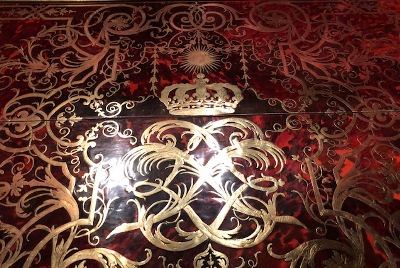
King Louis XIV Desk at Versailles
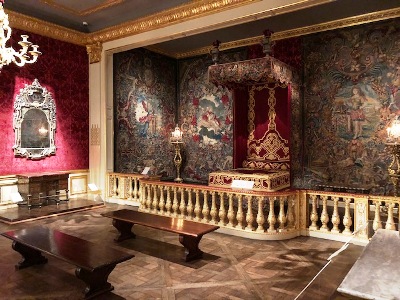
At the MET King's Bedroom Display
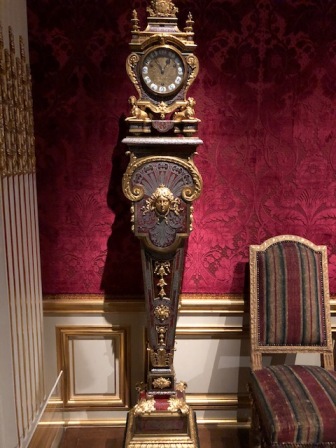
Clock At Versailles
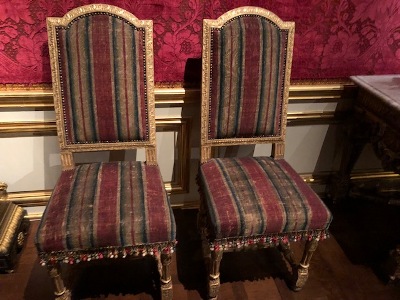
Children of the King sat in the this type of Chair
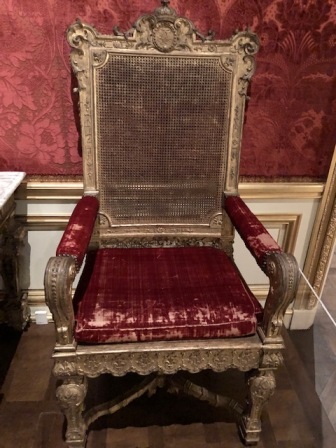
King & Queen were seated in this style of chair First Settlers Arrive in the Town of Schroon 1797 The Town of Schroon was settled about 1797. The names of the first settlers were Samuel Scribner, Moses Pettee, Thomas Leland, Simeon Rawson, and Benjamin Bowker. In 1800 Simeon Rawson about a mile north of the village started a small tannery which processed hides into leather. His tannery was located back of the Hargreaves cottage. He was born in Grafton, Massachusetts and later came from Shrewsburry, Vermont to settle in Scaroon at he age of 46 years old with his wife Anna Holden Rawson and several of his children. Simeon Rawson was a tanner by trade. He later moved his small tannery in 1818 to the village at the lake due to the lack of a sufficient water supply. The Hoffman road was then known as the Tannery Road. Simeon was a fifer in the Revolutionary War . He was under Captain Aaron Haynes. He enlisted January 1 , 1776 at Cambridge, Massachusetts. The muster roll dated him at Camp at Ticonderoga on December 1, 1776. He applied for a pension on April 1, 1818. His claim was allowed. Mrs. Rawson received the pension after his death in 1831 at the age of 82. His wife died in 1841. The first post office in Scaroon was in this same building. Clark Rawson ( Simeon's son) was the first Post Master. He carried the mail on horse back from Minerva thru Hoffman, Scaroon, Crown Point across the lake to Middlebury, Vermont. Clark's wife was Laverna Pond daughter of the Honorable Benjamin Pond of North Hudson . North Hudson was not formed at this time. Clark Rawson was supervisor of the town from 1828-1837 and again from 1843 to 1845. He was a highly intelligent man. He served his town well and was regarded as a very good citizen. Simeon and his wife are buried in the old Baker Street cemetery behind what was then the Schroon Lake Camp. Clark Rawson is buried in the old Baptist Cemetery at Severance in North Scaroon. The first death in the town was Mrs. Benjamin Bowker and the first child born in Scaroon was John T. Leland. The first marriage took place between John Scribner and Silence Leland. The first telegraph in this area was at the Roots Hotel and the first telephone was in North Hudson at Myron Bruce's place. Many early settlers came to town by way of the old State road and another highway built between 1840 and 1845 which ran from Lake Champlain to Carthage and passed through Schroon Lake. In 1835 there were 45 sawmills in the confines of the town and by 1855 the population of the town was 2085 a number never reached in modern times. The three major industries of the town were the tanneries, sawmills and the gristmills. Early Industries of the Town of Scarron
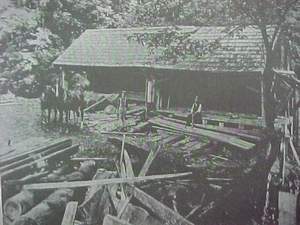
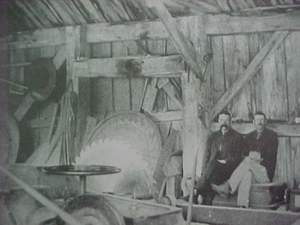
The Sawmill was one of the main stay Industries of the Town of Scaroon
45 Sawmills in the Town of Scaroon during its Heydays!
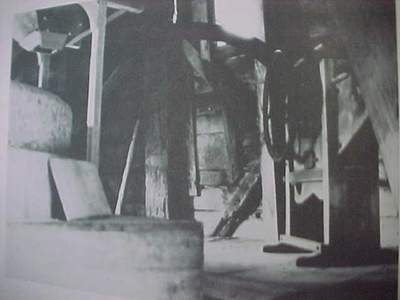
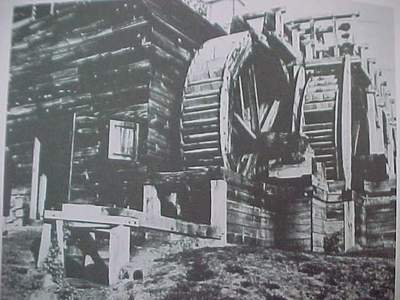
Early 1800 Gristmill-An Industry of the Town of Scaroon
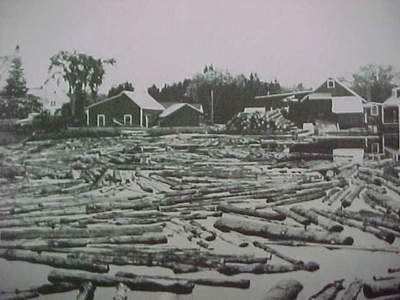
One sawmill in particular was built at the foot of Paradox Lake by Joseph Richards , and a gristmill by David Stowell. Most of the area was covered with thick forests and many of settlers turned their attention to lumbering. Logs were cut in great numbers and were sent down the Schroon River and through the lake. Their destination was Glens Falls and Sandy Hill to be manufactured into lumber. Freeman Tyrell who built the New Jersey House ( next to Dolly's) had a sawmill down on the lake. Mill Pond was always packed with Logs rolled down from the banks of the Brown Swan and were driven into Schroon Lake when spring arrived.
Sawmills Dominate Town of Scarron
In1813 the Fox Brothers were the first to ship their logs down the Schroon River.
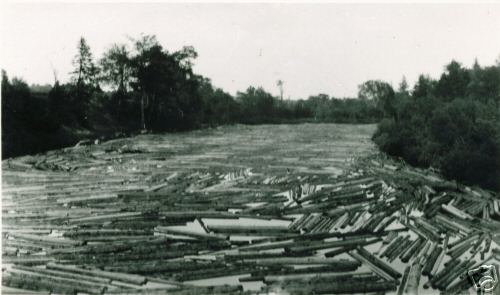
A Log Jam on the River was a Logger's Nightmare-Many Died Breaking Jams
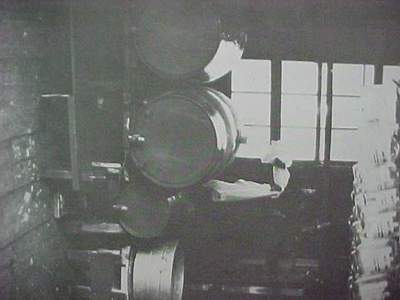
One law on the books stated that if any person was caught falling a tree in the river the consequences might result with that person having to stand in the river for 24 hours. A tree could cause a log jam which was the logger’s worst nightmare. The lumbering industry reached its peak between 1830 and 1845. There were many lumber Camps throughout the forests for many years. Many people were employed by the lumber industry. Many of the lumbermen came from the mountains in Canada to work in the forests of the Adirondacks and they settled in the nearby towns where they worked. French Canadians were very good lumberman. They were colorful men with their full cloth pants, plaid shirts, red woolen socks to the knees. They loved jewelry, large watches and chains and large rings, sometimes two or three on a hand. They loved to dance sometimes from 8:00 p.m. when they started until 5:00 a.m. in the morning. The girls were in their light colored dresses . By the end of the dance were the hand marks around their waists where the lumberjacks held them to swing. At the lumber camp they enjoyed eating donuts, black strap molasses, dried apple pie, beans and lots of pork. There were known not to be always loyal working companions and were often called double bladed axes. Sharp on both sides. It was reported that they were known to feed sick horses a diet to prolong the sickness, hoping to get more time off. Sometimes they would put termites in their bosses bed in revenge over some little camp episode. They liked to play poker(cards) and were known to raffle off their watches and rings because they would get tired of wearing the same ones and they wanted new ones. Many used bear grease to slick down their hair. Many of the early settlers made their own soap. They used a barrel end they knocked out. It was called a leach barrel .
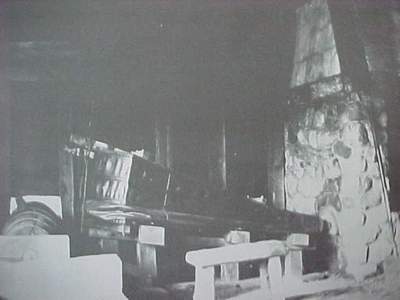
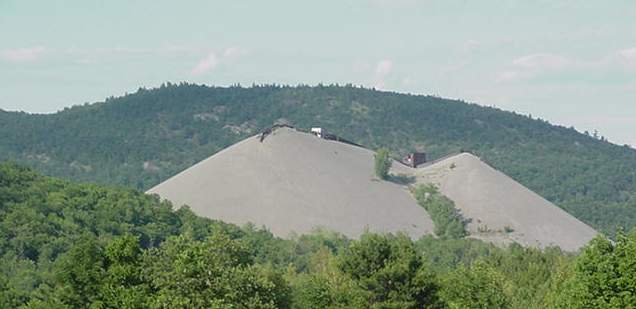
Iron ore was found in the town and a forge was built in the town before 1830 at the Schroon falls, by Horace Hall. The ore was mined in the Paradox area at the Schofield Ore Bed which Horace Hall opened in 1828. Bar iron was made from the ore of this mine. This ore bed was worked until 1870 by John Roth. He operated a forge near Palmer Pond in the Town of North Hudson. Much of his ore came from Hamonville in Crown Point. The quality of the ore in the Paradox area was very good but high transportation costs soon made it unprofitable to mine. Prices dropped and as a result the ore beds had to close. This is was also true for the Mineville and Witherbee area by which their mines produced the second highest quality of ore in the world next to Sweden. The mines closed in 1971 because it became cost prohibited to bring the ore up from such deep depths and from competition in the Great Lakes Region.
An Early Blast Furnace
Tailings extracted From the Mines at Mineville & Witherbee between 1938-1971
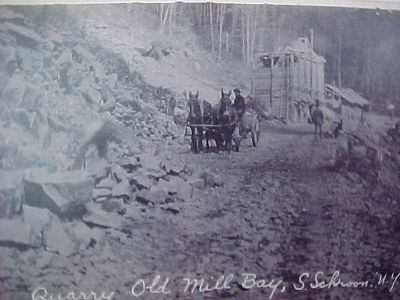
The Quarry at Old Mill Bay, South Schroon provided employment
The Tannery was an important Industry of the Town in its Heydays Another important industry centered on the manufacture of leather in the many tanneries located throughout the town. The hemlock forests provided the bark necessary for the production of leather. Schroon Lake tannery was established by Lorenzo Hall in 1852. It produced sixteen thousand hides a year. His tannery was located at the old Leland House Farm. There was another tannery at Hoffman. In 1861 William Potter and Dan Wyman had a tannery at the mouth of Rogers Brook. Berry Bowker had one at Platt brook. He tanned mostly upper leather. Many Irish came to work in the tanneries, Seeleys, Connels, and Sweeneys. One night there was a terrible accident on Christmas night when a man slipped and fell into a boiling vat. The houses around the Leland House were the homes of the tannery workers. Its was called tannery road. There was another tannery where the Leland House barns stood on Rogers Brook. Bill Miller ran a boarding house for the men who worked at the tannery. There was tannery where the park is today close to the former Silbert's House. Hemlock bark was used to make the acid to tan the leather. The forests were covered with hemlock. Hides were tanned, rolled and pressed. Black oil was used to color if black hide was needed. The loggers pealed the hemlock bark off the tree and run them down the Schroon river to the Glens Falls mills. Many trees went to waste where cut. Horses were most essential in hauling logs and for farming. Oxen were sometimes used. Many blacksmiths started up. One of the best and most popular blacksmith was Sam Saunders. He had a shop where the post office was where the Yellow Coach motel is. Later he built another at the entrance of the Brown Swan where the Word of Life entrance is today. 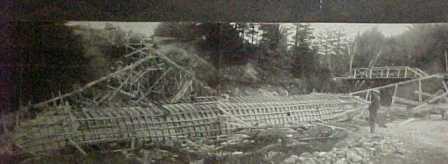
Other industries in Town included a Carpet and a Cider mill. There was a Cider Mill also a Sawmill on the pond in front of the Star Platt House run by Starr & Dan. Later George Coolidge had a shingle and cider mill at the same site. There was a log house and several barns built on the Platt brook by Oliver Knox known today as Knox field. Mrs. Ella Bailey then Ella Garfield and Luella Taylor were called in there years ago to help deliver a baby named Daniel Knox.
A Cider Mill was located on a pond in front of Starr Platt House
There was a hoe factory located near the waterfall and there was a grist mill in the same location . A Don Bailey ran it and later paossibly a Mr. Fiske. The gristmill burnt when Nick La Point was running it. Asa Craw was a carpenter. He built Elm Tree Lodge. he also helped build the Leland House and the Arthur Aiken house. Hank Cornell lived in the Aiken house until he traded it for a house on Baker Street.
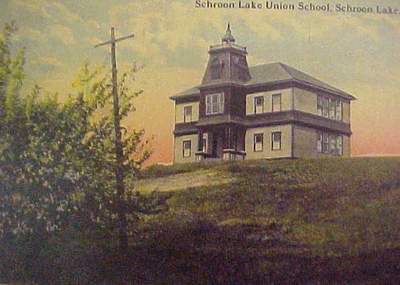
The first school was taught by Clark Rawson, son of Simeon Rawson, about one and half miles north of the present Schroon village. There were a total of 7 school districts in the town. Union School was located in the back of Main Care Auto Center up on the hill. There was also a three room school house where the former Grand Union was located. There was another school house on the Alder Meadow road. In 180 Schroon had 17 school houses. It was reported by the trustees that the district received $568.71 in revenue. Raised for teachers pay was $643.30
After the American Revolutionary War in 1781 as part of a soldier's compensation for fighting to secure our independence from England soldiers were offered 600 acres each as their pay. It is interesting to note that not one soldier accepted the government's offer. This region of the Adirondacks was mostly rocky and had poor soils. The land was not suitable for farming. In 1836 Governor William Marcy ordered a geological survey of the Adirondacks. Ebenezer Emmons completed the survey on August 5, 1837. Emmons named the highest peak Marcy after the governor's name. Dr. Emmons chose the name Adirondack for the High Peak Region.
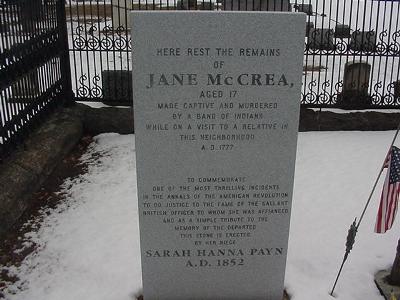
Murder of Jane McCrea Sparks Revolution
Gravesite of Jane McCrea & Duncan Cambell
The Outbreak of the Civil War 1861-1865
By 1855 the population of the town of Schroon reached 2085. With the outbreak of the Civil War in 1861 every town was forced to contribute its share of fighting soldiers to defend the Union. The institution of slavery was an evil and many were determined to see its termination. The war cost our nation over 650,000 lives, more than all of the combined wars our nation was engaged in throughout its history.
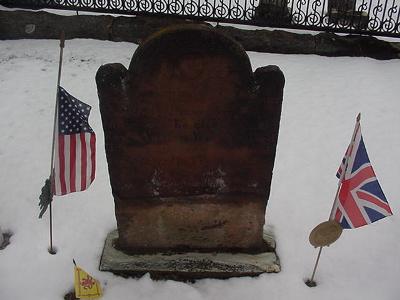
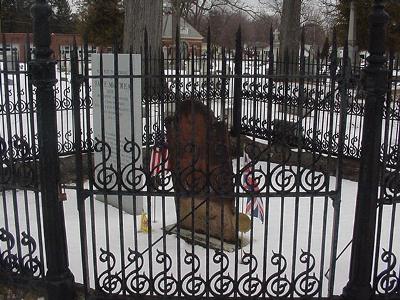
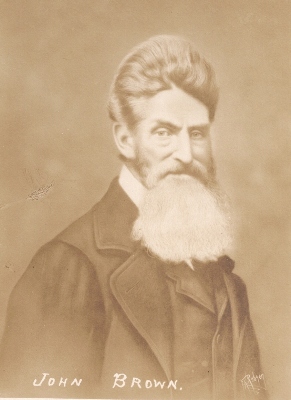
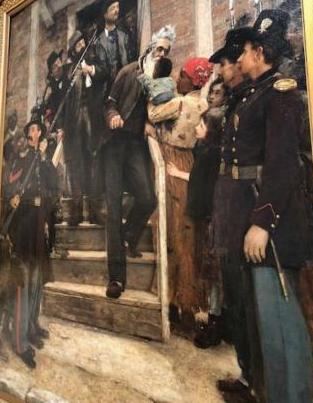
John Brown
The Abolitionist from The Town of North Elba
John Brown kisses a black baby
After the Civil War in 1865 the region of the Adirondacks became known to many through the efforts of the writing of the book Adventures In The Wilderness by Reverend William H. Murray. He was first a minister in Boston and later in Connecticut .Many read his book which portrayed the Adirondacks as the most beautiful and glorious region where one would want to vacation . His book created a stampede to the Adirondacks. Even though many enjoyed the region many did not. If you were to visit the Adirondacks in the spring the black flies and mosquitoes were there to greet you making your stay very uncomfortable. The decision for many was to return back home. A stampede in June was a stampede out in August with stagecoaches filled with bitter people. Many began to speak their minds to the Reverend who portrayed the region as glorious paradise everyone should visit however he failed to mentioned the other elements. As a Congregationalist minister he was forced to resign his position and later found himself working in the kitchen at a restaurant in Montreal. Nonetheless, by June of 1869, many were continuing to pour into the woods and within six years the number of hotels had grown 4 fold. In 1872 the New York State legislature called for a topographical survey of the Adirondacks. Verplanck Colvin, a self appointed surveyor, completed the survey under the most difficult conditions. Using chains with links he measured distances with his crew who battled the elements of bad weather and insects over several years. He would not allow his crew to leave the woods because he was afraid they would never return to finish the job. When finished in 1875 he was going to turn over the survey to the State of New York but found they lacked the funds to pay him so he kept the survey until they could pay him for his services. Unfortunately, Mr. Colvin in the following years suffered mental fatigue and needed supervision and care. He was the first to make a report to the State Legislature that the forests in the Adirondacks should be preserved and that a Park should be created for future generations.
Dr. Thomas Durant completed 40 miles of railroad from Saratoga to North Creek in 1871. He and his son organized a fast coach service line to Blue Mt. Lake from North Creek. Frederick Durant in 1882 built the Prospect House on Blue Mountain Lake. It was T-Shaped -two hundred and twenty five feet wide and six stories. The hotel had 300 rooms and could accommodate 500 guests, The elevator operated by steam power. Every bedroom had electric lights powered by 2 dynamos with steam from a wood furnace The cost to rent a room was $25 per week or $15 per week during the off season.
The Gilded Era of the Town of Schroon 1875-1910
Between 1875 and 1910 the Adirondacks was flourishing as a tourist resort area. This was the Gilded Age of the Adirondacks. Many hotels such as the most famous Leland House in the town of Schroon were built during the gilded era. In 1875 there were 200 hostelries including elegant Inns and large Hotels throughout the Adirondacks. The town of Scarron had its share to contribute to the region. Tourists from New York City and elsewhere made their journey first by stage coach and later by way of the railroad to the Adirondacks. The trip was long and difficult at times . When they did arrive at their favorite Hotel or Boarding House they usually stayed for one or two weeks.
From Riverside or the Landing at Scarron Tourists made their way to Town First Leland House-1872-1914
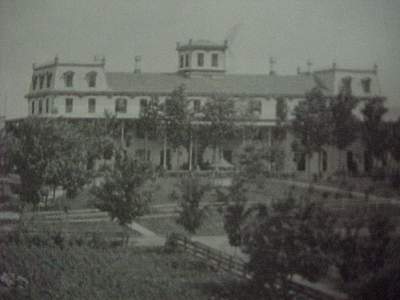
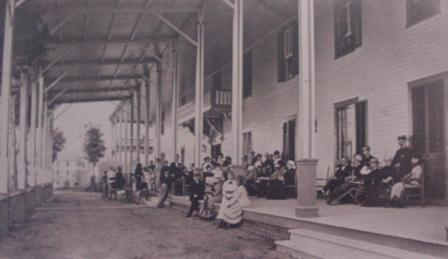
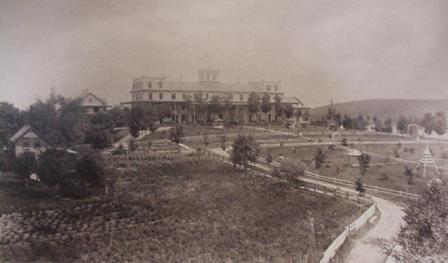
The first Leland House was built in 1872 on a 6 acre parcel by Thomas Leland. It accommodated nearly 300 quests. It was three stories high, 175 guest rooms located where the present hockey rink is today in town. In 1898 the Emersons purchased the Leland House and they bought the Adirondack Inn and the Windsor Hotel which as annexes to the 2nd Leland House greatly increased the room capacity of the Leland Hose to three hundred bedrooms and three hundred bathrooms. Trout and Venison were highlights on the dinner menu. After the main meal Sherbet Ice Cream was served as a favorite desert. The price for a week's stay was between $12 to $17 dollars.
On October 31, 1914 , Halloween night, pranksters were running in an out of the churches on main street and ringing the church bells. One prankster threw a cigar in the leaves and the Leland House became engulfed in flames. Many worked delinquently to put the fire out. They were unable to extinguish the fire because the water system have been turned off for the approaching winter months. This the memorable hotel on Schroon Lake burned to the ground. It was not long after the fire that Mr. Emerson decided to build another Leland House on the same site.
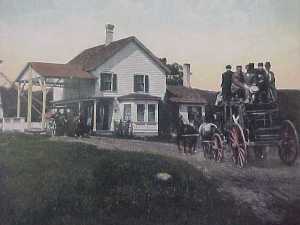
By Stage Coach Guests Would Arrive For Their One or Two Week Stay
The Windsor was added as an annex to the second Leland House . It was an outgrowth of the Hotel run by C.F. Taylor. Former Taylor house. William McKenzie ran it for a couple of years as did Mr. Jenness. On Memorial Day it serves as the headquarters for G.A.R. The lawn areas were covered with picnic tables, many speeches were made from here, and many songs were played after the Parade. Captain Lycett always led the parade, a little man with lots of gusto.
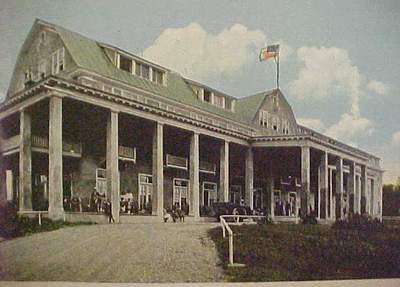
Second Leland House-1915-1952
In 1915 Emerson instructed his workforce that he wanted the Leland House to be rebuilt which it was done in a one year at the cost of 125,000. It caught fire again on December 16, 1938. The Hotel operated until 1952. Many fond memorable experiences with remain with many who visited the Hotel and vacationed on beautiful 9 mile Schroon Lake. While the guests were at the hotel many made reservations and boarded their favorite steamboat for an evening cruise around the lake.
Steamboats Popular on Schroon Lake
Passengers Arrive -Evelyn Steamboat
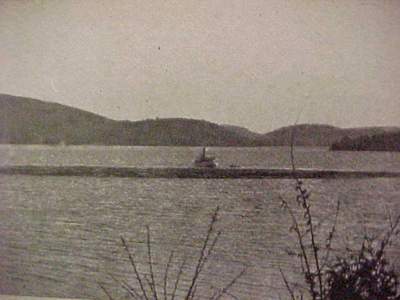
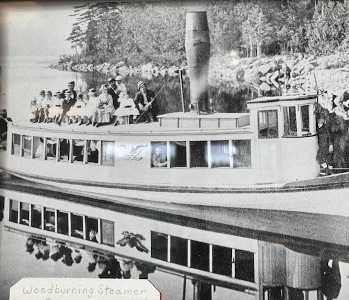
Two Steamboats that were favorites for the quests were the steamship the Evelyn and the other the Effingham. Both operated during the vacation months offering scenic tours of the lake. In the off season the steamboats would pull the log booms from the inlet to the outlet of the lake where the logs would continue to float down the Schroon River until they reached the sawmills in Warrensburg and Glens Falls, New York . The fox brothers were the first to float logs down the Schroon River. The Schroon River as well as others remained public highways until 1953 when the last log drive ended. A good ax man could fall 60 trees per day. As mentioned the log jam was a loggers nightmare. Many sacrificed their lives in the earlier Spring trying to break up the jams only to be found later in the summer downstream. One story after another in the logging Camps detailed the heroic deeds of the bravest loggers who tried to break up these jams. It was not the $3.50 per day that really mattered but rather it was their own will and determination to keep the logs flowing down the river to reach their final destination at the sawmills in Glens Falls, New York.
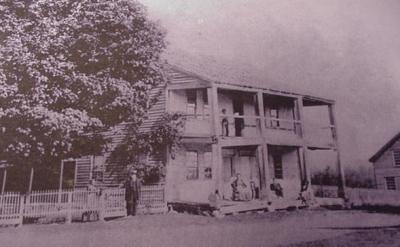
First Hotel in the Town of Schroon -Lockwood Tavern-1800's During the 1880's from Saratoga the visitors to Adirondack Region would arrive by train to Riparius. They would then board the Stagecoach and travel to the southern end of the Schroon Lake to Pottersville and board the lake Steamer called the Evelyn under Captain Sam Russell ran from June thru October; the stage ran to Riverside the remaining part of the year. The Evelyn would proceed in a northerly direction up the lake and drop off guests at the Grove Point House and later at the Leland House. The stage runs were made to Lock Muller, Ticonderoga and the Schroon River. About 500 people lived in the village of Scaroon at the turn of the century.
The Effingham steamboat was built
for Sam Russell and Cheney in 1879 by Waters of Whitehall. It was
larger than the Evelyn which was built afterwards. It operated by
steam generated from 4 foot wood they burned. The steamboat made three
trips daily up and down the late.
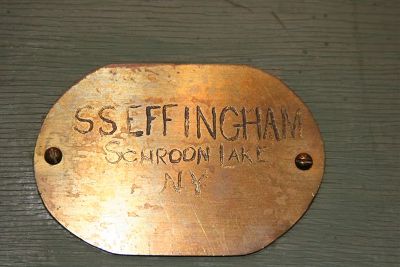
The Compass of the Effingham
Carriages were arranged buy the various hotels and boarding houses in the town to meet the guests at the boat dock adjacent to the Bogle Boarding House and transport them to their resort. Most reservations were for two weeks or longer. Traveling was not easy and once you were at your destination to stayed there until it was time to depart. On the East side of Lake was the Watch Rock Hotel. It was run by Thomas Wells. Later George ceil ran the Hotel. To the north and right of the Hotel William Porter of Troy and Judge Cotterel had beautiful homes. The Porters had a large beautiful home with a stable for his horses, a fine boathouse and a pleasure boat, considerable land and a farmhouse for his caretaker Harvey Fairfield. The Pickhardts were another very wealthy family who often visited the town in the summer months and stayed at the Leland House. They loved it there. Mr. Pickhardt decided to purchased land in town from Abyah Smith's . It was known as Maypines. He spent a considerable amount of money building barns, sheds and race track with a fence around it. He brought in many horses and had a stock farm pure bred breeding. Mr. Nichols ran the stock farm first for Mr. Pickhardts then later Thurman Leland was the manager. Mr. Pickhardt employed many people in town. He once conceived the idea that the waste from the Tanneries rolled back could be used as a fertilizer for the soil. He owned and intended to build a Villa where the Schroon Lake Country Club is on the east side of the Lake across from now Edgewater and owned at that time by a Harris family member. It has a nice sandy beach. He arranged for barges, 2 of them to draw the refuse from the Tannery there near the Silbert's House to his land. In the winter sleds drew it down on the ice. The Tannery in the Park burned , the old sawmill west of it was torn down and some of the wood was used for a mill further down the lake.
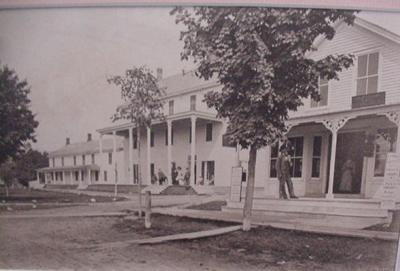
The Bogle Boarding House
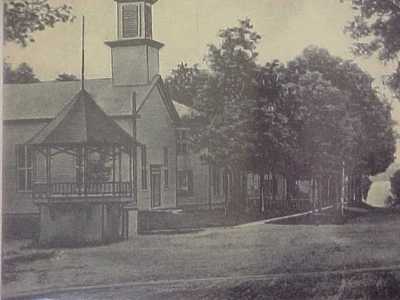
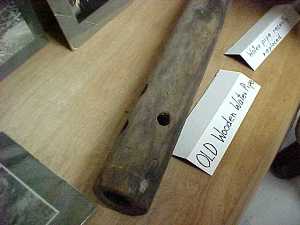
The Band Stand located at the center of Main Street & Old Wooden Water Pipe used in the Town years ago
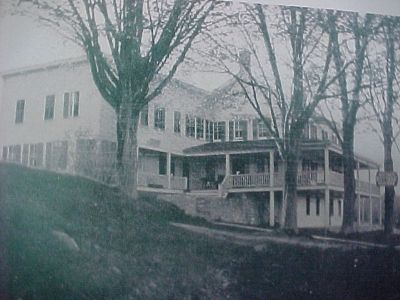
The Silbert Boarding House-One of many in the Town
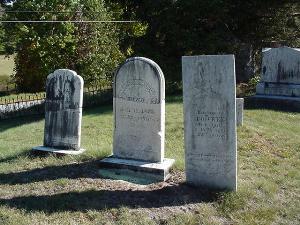
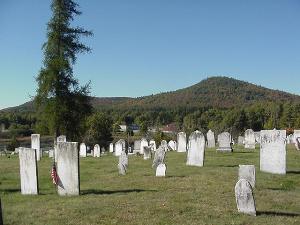
On Left -Benjamin Bowker Gravsite-First Supervisor of North Hudson On Right-Severance Cemetery-Platt Gravesite
.........................................................................................................................................................................................
|
||||||||||||||||||||||||||||||||||||||||||||||
 Native
Americans inhabit the Adirondacks
Native
Americans inhabit the Adirondacks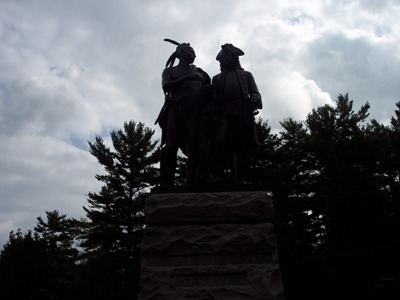 in the Adirondacks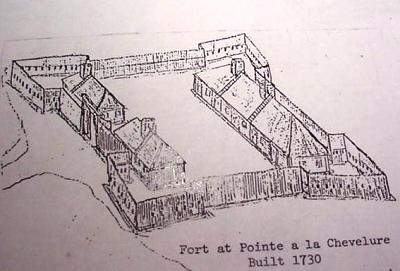
 Forges
& Mining
Forges
& Mining 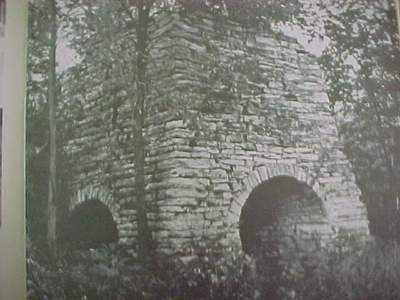
 Adirondack
Region Becomes Popular
Adirondack
Region Becomes Popular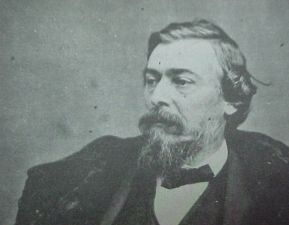 Durant the Railroad Builder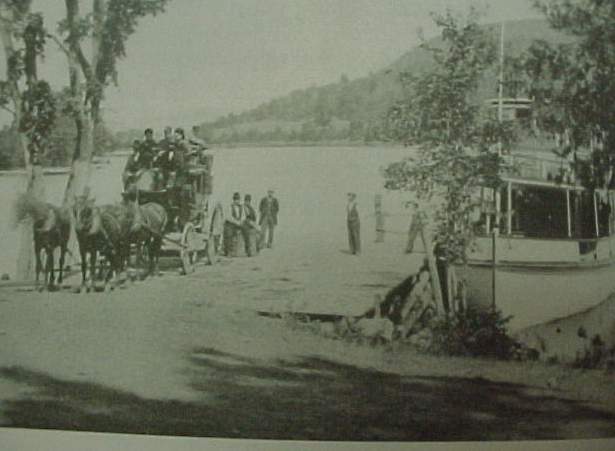
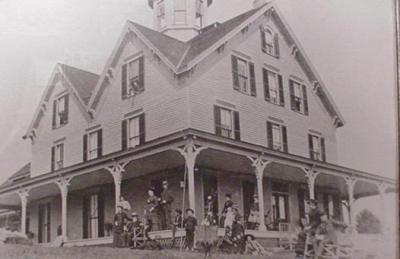 The
Grove Point House was built by Royal Mead of Chestertown in 1880.
They worked all winter. Mr. Mead built it for Mr. Henlow. He ran
it for five years. When Mrs. Henlow died he sold it to MacKenzie,
it was run successfully for years until MacKenzie fell ill and it became
vacant and later burned to the ground.
The
Grove Point House was built by Royal Mead of Chestertown in 1880.
They worked all winter. Mr. Mead built it for Mr. Henlow. He ran
it for five years. When Mrs. Henlow died he sold it to MacKenzie,
it was run successfully for years until MacKenzie fell ill and it became
vacant and later burned to the ground.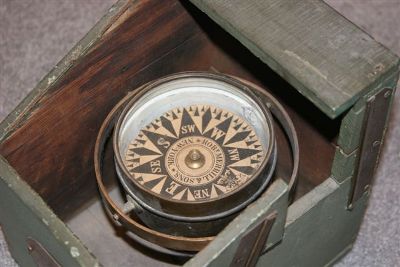 When
James Cheney ( Mary Locke's husband) Russell purchased his shares.
Mr. Emerson bought the Evelyn and named it after his former sweetheart .
Both of these steamboats did a great business rafting down logs from the
Schroon River to the outlet of the lake. Freem Saunders was
captain of the Evelyn and George Burnwell , engineer. There was another
steamer known as the Topsy named for Mrs. Emerson ( her nickname).
The first boat on the lake was the Libby, it belonged to Mr. Charles K.
Benedict. Williamettia was another fine pleasure boat owned by the
Pickhardts. Mr. Bush had a steamer , the Ellen which ran from Millbrook
. Millbrook became known as Adirondack.
When
James Cheney ( Mary Locke's husband) Russell purchased his shares.
Mr. Emerson bought the Evelyn and named it after his former sweetheart .
Both of these steamboats did a great business rafting down logs from the
Schroon River to the outlet of the lake. Freem Saunders was
captain of the Evelyn and George Burnwell , engineer. There was another
steamer known as the Topsy named for Mrs. Emerson ( her nickname).
The first boat on the lake was the Libby, it belonged to Mr. Charles K.
Benedict. Williamettia was another fine pleasure boat owned by the
Pickhardts. Mr. Bush had a steamer , the Ellen which ran from Millbrook
. Millbrook became known as Adirondack. 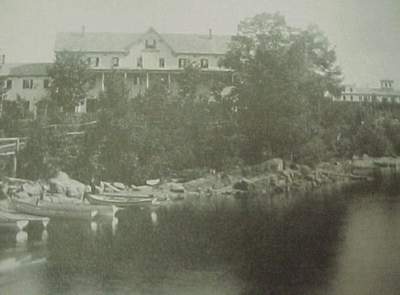
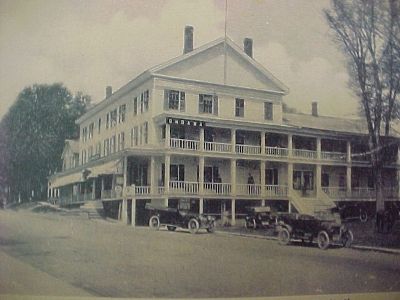 Beside the Bogle Boarding House and the Leland House there was the
Ondawa Hotel where present day Stewarts is located. The Ondawa was
built by Josiah Rawson first called the Schroon Lake House. Hiram
Blanchard bought it and sold it to Paris Russell who expanded it into a
large Hotel. Mr. Russell had a partner John Conley. They
named it the Ondawa. They later sold it to John Burwell who was unable
to keep up on his payments and it went back to Mr. Russell He later
rented it to Charles Burnell and then later sold it to Mike and Morris
O' Conners. It was later sold to Frank and Charlotte Bailey who
became very successful with the Hotel on a year round basis. It
caught fire in August of 1919 on Sunday evening. This fire
resulted in the formation of the first volunteer fire department for the
Town of Schroon. Mr. Cheney help purchase the departments first fire
truck.
Beside the Bogle Boarding House and the Leland House there was the
Ondawa Hotel where present day Stewarts is located. The Ondawa was
built by Josiah Rawson first called the Schroon Lake House. Hiram
Blanchard bought it and sold it to Paris Russell who expanded it into a
large Hotel. Mr. Russell had a partner John Conley. They
named it the Ondawa. They later sold it to John Burwell who was unable
to keep up on his payments and it went back to Mr. Russell He later
rented it to Charles Burnell and then later sold it to Mike and Morris
O' Conners. It was later sold to Frank and Charlotte Bailey who
became very successful with the Hotel on a year round basis. It
caught fire in August of 1919 on Sunday evening. This fire
resulted in the formation of the first volunteer fire department for the
Town of Schroon. Mr. Cheney help purchase the departments first fire
truck.